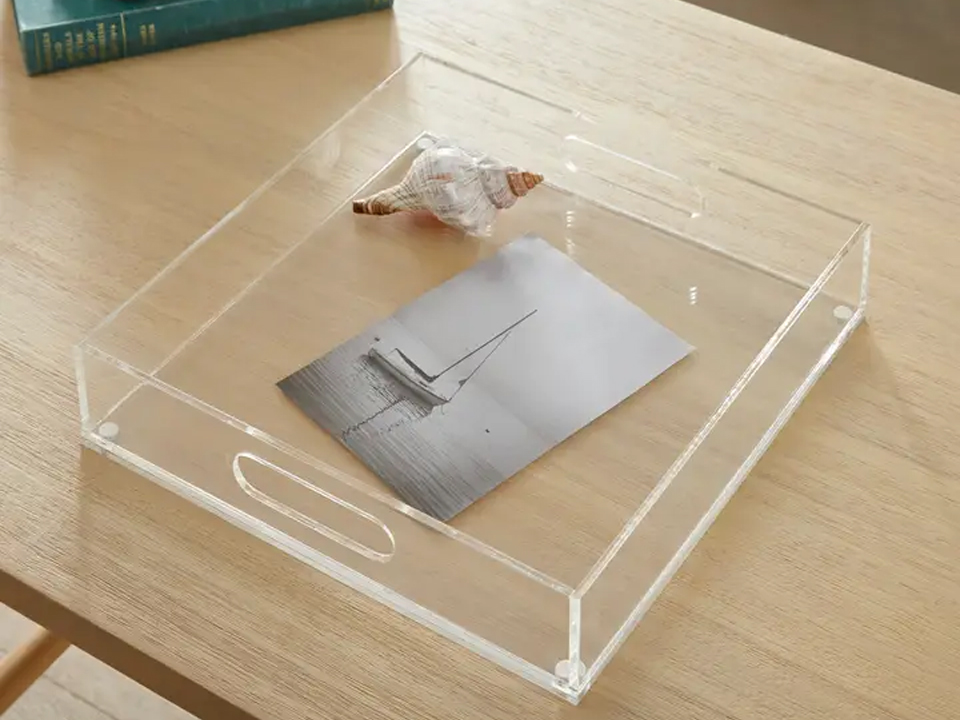
A custom acrylic tray is a made-to-order tray designed for presentation, organization, display, or serving in commercial and personal settings. Acrylic offers a polished look, a clean glass-like appearance, and relatively low weight, while fabrication allows buyers to tailor size, color, handles, branding, and layout to the application. Acrylic sheet is widely used for fabricated displays and other formed products. Request a quote to discuss your custom acrylic tray project.

Custom Acrylic Trays

An acrylic tray is a rigid tray made of acrylic sheet, commonly PMMA, a versatile thermoplastic used in fabricated products and displays. Clear grades can provide strong visual clarity with less weight than glass, making acrylic practical for products that need both presentation and easy handling.

A custom acrylic tray is produced to requested dimensions or design details rather than limited to a standard retail size. Depending on the project, trays may be made for display, serving, product grouping, desk organization, hospitality, or branded presentation.

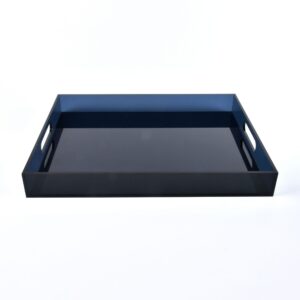
Acrylic trays offer a useful balance of appearance, practicality, and versatility. Clear acrylic keeps displayed products visible, while black acrylic or classic white can create a stronger visual frame around merchandise, food service items, or accessories.

Custom Acrylic Trays

A customizable tray can be developed around the product, space, workflow, or brand presentation. Commonly requested options may include:

Material colors, surfaces, and fabrication possibilities vary by acrylic product and processing method. Share your drawing or reference image so the manufacturer and supplier can confirm what can be made.

Using acrylic trays can solve practical presentation and organization needs across many buyer types. In retail display, trays can group perfume bottles, apparel accessories, gift items, cosmetics, jewelry, or other small product ranges while keeping the presentation tidy.

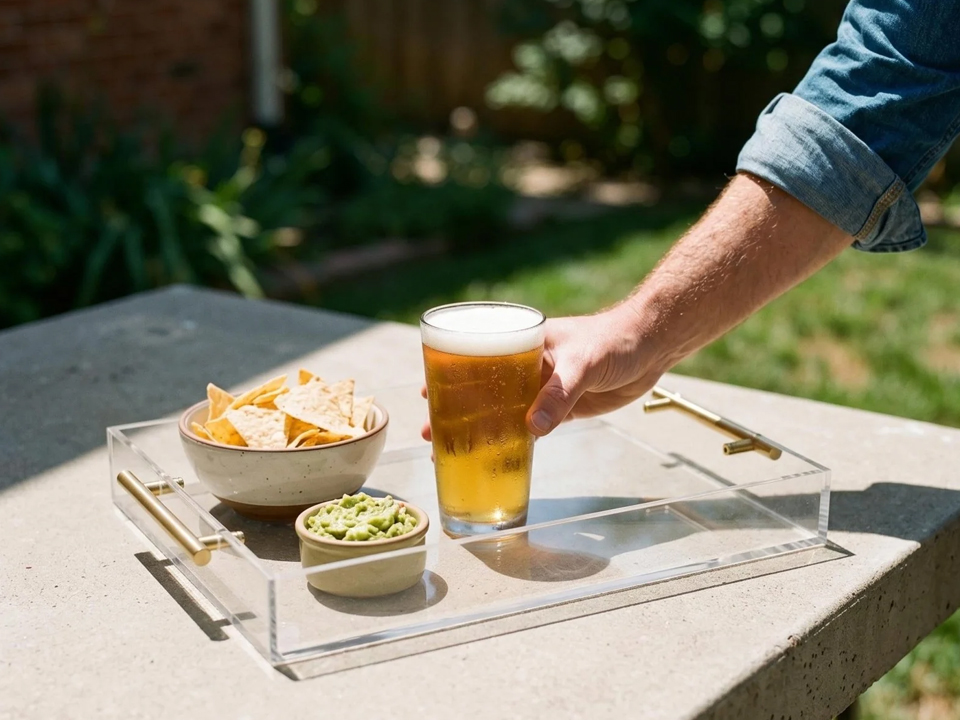
Hospitality and event buyers may use an acrylic serving tray for presenting drinks and appetizers, serving hors d’oeuvres, or serving breakfast and coffee. Offices can use trays for office supplies, desk decluttering, and keeping shared counters organized. In residential or showroom settings, display trays can support coffee table organization, decluttering, and functional and decorative styling.

Acrylic trays with handles are useful when the tray needs to be carried frequently or used as a serving tray. Handle size, placement, and attachment style can affect grip, usable interior space, and the overall modern design.

Buyers may also use terms such as lucite tray, plexiglass, perspex, or custom plexiglass serving trays when searching for similar clear acrylic products. These names should not automatically be treated as identical material specifications: PLEXIGLAS® is a registered acrylic brand, while PERSPEX® is also sold as branded acrylic sheet. For production, specify the performance, color, thickness, finish, and appearance you require rather than relying only on a material nickname.

Custom Acrylic Trays

How to Choose the Size You Need

The right acrylic tray size depends on what it must hold, where it will sit, and how it will be handled. Before requesting an acrylic custom design, measure the available shelf, countertop, tabletop, cabinet, or display area and note the dimensions of the products that will go inside.

Also consider handle clearance, wall height, serving purpose, compartment needs, and the spacing required between items. For a large acrylic tray, confirm that the overall proportions and material thickness are appropriate for the intended load and handling method. Sending exact measurements helps a supplier recommend the size you need.

Acrylic Products Manufacturing

Lead times for custom acrylic products depend on the project. Dimensions, quantity, design complexity, material specifications, printing or branding, edge finishing, handle details, and fabrication steps can all affect production planning.

For a useful quotation, send as much of the following as possible: drawings, required dimensions, quantity, intended application, acrylic color, artwork or logo files, and reference images. If you have a target delivery date or destination, include that as well. This gives the supplier enough information to review feasibility and discuss realistic production and shipping timing without relying on assumptions

Custom Acrylic Trays

A custom acrylic tray is a fabricated tray made to specified dimensions, shapes, colors, or functional requirements for display, organization, presentation, or serving. Acrylic, also known as PMMA, is a rigid thermoplastic valued for its clear, glass-like appearance, relatively low weight, and suitability for fabrication into display products.

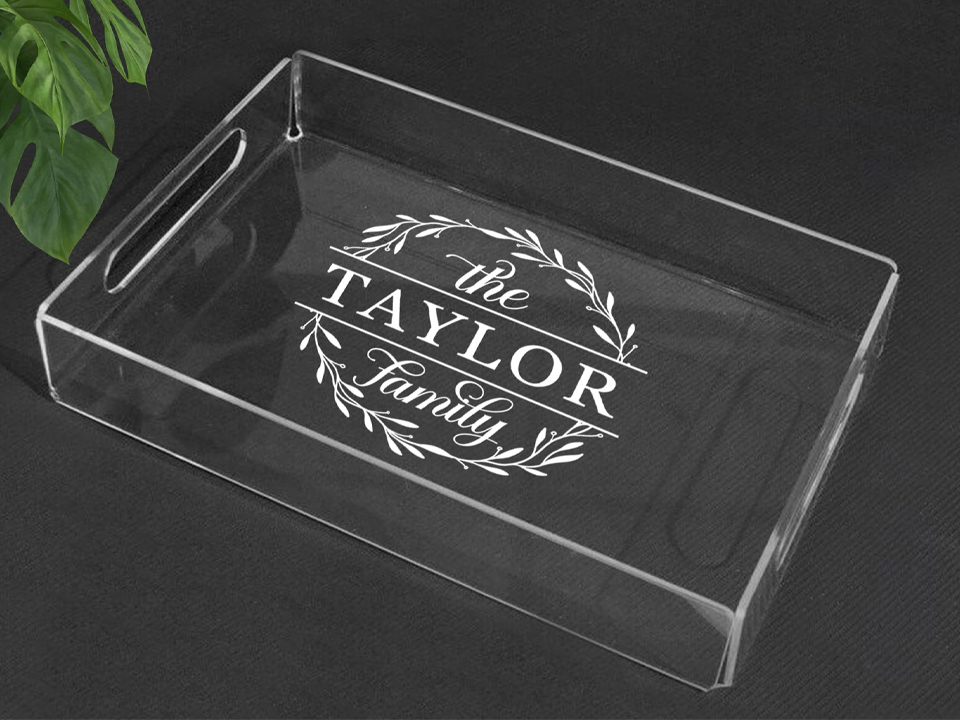
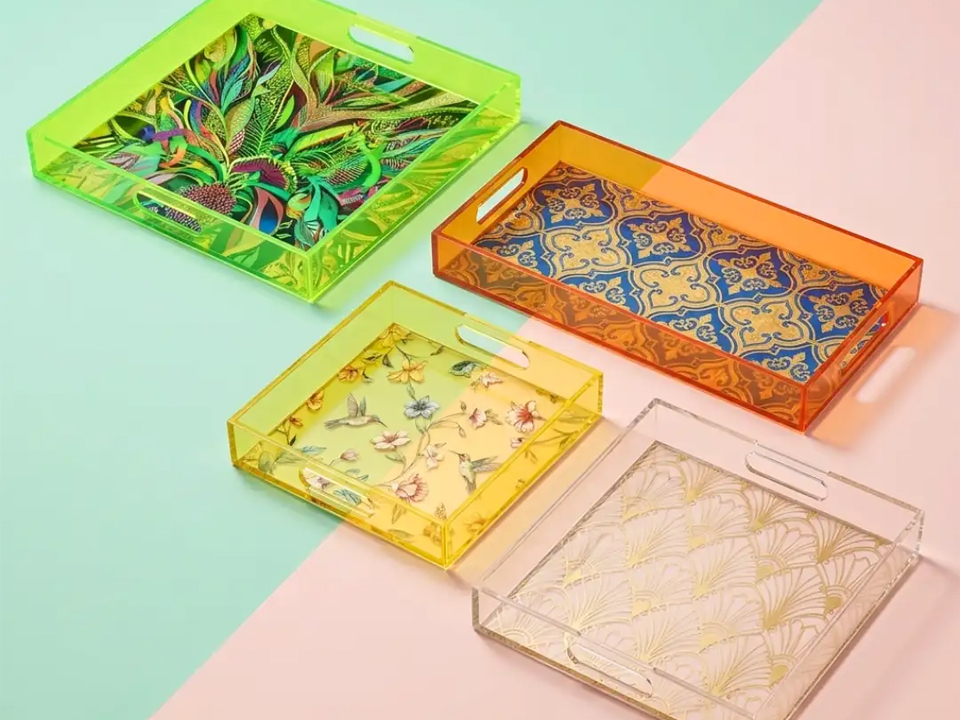
Customization can include dimensions, shape, clear or colored acrylic, material thickness, edge treatment, handles, compartments, printed graphics, and logo placement, depending on the manufacturing process and project requirements. Acrylic sheet is available in different colors, finishes, and formats, giving buyers flexibility when developing branded or application-specific products.

Custom acrylic trays are commonly used for retail displays, cosmetics and perfume presentation, gift items, apparel accessories, office organization, hospitality service, events, and small product displays. Acrylic is widely used in point-of-purchase and retail display applications because it can provide clear product visibility and can be fabricated into different display formats.

These terms are often used when buyers are searching for acrylic-based products, but they should not automatically be treated as identical specifications. Acrylic generally refers to PMMA, while PLEXIGLAS® and PERSPEX® are branded acrylic materials. For a custom lucite tray or plexiglass serving tray project, it is better to specify the required color, thickness, finish, appearance, and intended use.

For an accurate quotation, provide the required tray size, quantity, acrylic color or material preference, thickness if known, handle requirements, logo or artwork, intended application, and delivery destination. A drawing, dimensioned sketch, CAD file, or reference image can also help communicate the design clearly. Custom acrylic fabricators commonly request dimensions, quantity, material requirements, and design information before evaluating a project.